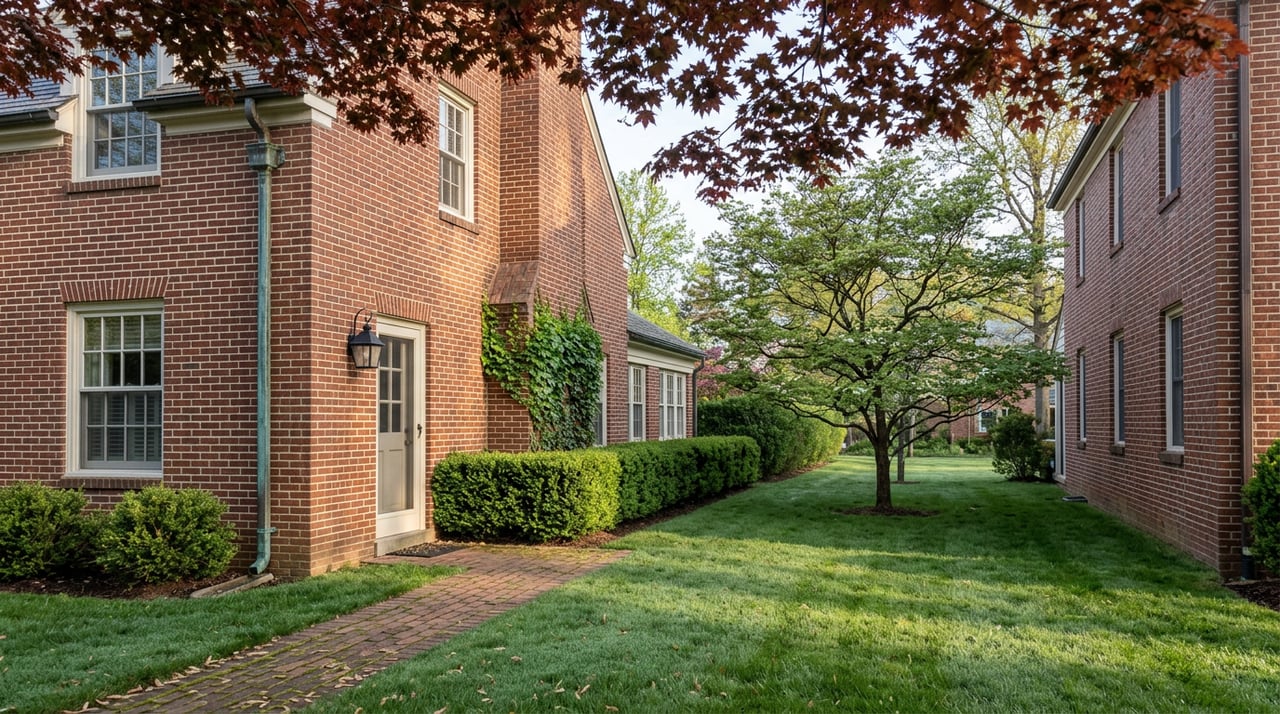
An investor client called me in June with a renovation-upside colonial he'd already run numbers on. Nice bones, tired kitchen, a detached garage he pictured as a studio guest suite. His pro forma had a line for short-term rental income that made the whole deal pencil. The house sat inside what everyone, including the listing sheet, called "Chevy Chase, Maryland."
It also sat inside the Town of Chevy Chase.
That distinction cost him the deal, or at least the version of the deal he'd underwritten. The Town of Chevy Chase is one of the specific incorporated municipalities where Montgomery County's zoning code prohibits short-term residential rentals outright, alongside Chevy Chase Village, Chevy Chase View, and Chevy Chase Section 3. No license application would fix it. No amount of guest-suite polish would change the zoning.
Three miles away in unincorporated Bethesda, the county's short-term-rental rules would apply instead, including its licensing and owner-residency requirements. Same buyer, same renovation budget, same regional label on the mailing address. Different rules.
That's the thesis worth sitting with if you're evaluating income potential anywhere in this corridor: the word "Chevy Chase" or "Bethesda" on a listing doesn't tell you what you're allowed to do with the property. The municipal boundary determines which zoning rules apply; the county's licensing requirements matter too, and that boundary rarely shows up until someone goes looking for it.
The Municipal Boundary That Changes the Rules
Montgomery County is dotted with small incorporated municipalities that sit inside the county but run their own zoning on top of it. Chevy Chase Village, the Town of Chevy Chase, Chevy Chase View, and Chevy Chase Section 3 are four of them, and all four have zoned short-term rentals out of existence within their limits.
Bethesda has no such incorporated government. It's unincorporated territory governed directly by Montgomery County, which means the county's general short-term rental framework applies there without an extra municipal layer saying no.
Here's what that split actually looks like on the ground:
| Unincorporated Bethesda | Chevy Chase Village / Town of Chevy Chase / Chevy Chase View / Section 3 | |
|---|---|---|
| Short-term rentals allowed | Yes, with a county license | No, prohibited by municipal zoning |
| Governing authority | Montgomery County DHCA | Municipal government, zoning supersedes county STR program |
| Annual license fee | $500 (short-term rental), according to Montgomery County | Not applicable |
| Room Rental-Transient Tax | 7% of rental revenue | Not applicable |
The county's own short-term rental page spells out the prohibited list plainly, and Airbnb's help center for Montgomery County repeats the same municipalities as places where its standard county guidance doesn't apply. Neither source hedges on this. If the parcel sits inside one of those town lines, the zoning question is already answered before you touch a licensing form.
The License Was Never Built for a Whole-Home Rental
Even where Montgomery County allows short-term rentals, the license was not designed for the "buy a house, rent it out on Airbnb full time" model. It was designed for homeowners renting out a room, a basement, or their own home while they travel.
The dwelling has to be the property owner's primary residence. If the owner is absent, the rental is capped at 120 nights per calendar year. If the owner is present, there's no cap, because the county is licensing a homeowner who happens to host, not an investment property that happens to have an owner's name on the deed.
That framing got tighter in 2024. Under the original 2018 rules, either the owner or an "owner-authorized resident" could satisfy the primary residence requirement, which left room for an owner to designate someone else, a manager, a long-term tenant, as the person living there full time while the owner collected the income remotely. Bill 22-23 and its companion zoning amendment, effective July 1, 2024, struck that language. Today the primary residence has to belong to the actual owner, not a stand-in.
Council member Hans Riemer, who wrote the original 2017 legislation, was direct about the intent when the framework first passed:
"We don't want to open our residential housing to investors to come in and buy properties and turn them into hotels where they own five or six hotels in the county that are essentially houses."
That sentence, reported at the time by Bethesda Magazine, is the policy in one line. Montgomery County built a program for homeowners who host, not a licensing path for a portfolio of whole-home rentals. If your investment thesis for a Bethesda property depends on treating it as a hands-off, always-on rental, the county's own framework was written to make that harder, not easier.
What Shows Up Anyway
None of this means short-term listings have vanished from the area. Tracking data covering the twelve months from February 2025 through January 2026 counted roughly two dozen active short-term listings carrying a Chevy Chase, Maryland address.
That number doesn't contradict the zoning ban so much as illustrate the problem with using an address as a legal signal in the first place. "Chevy Chase, Maryland" on a listing or a mail carrier's route can cover both the incorporated villages where STRs are banned and unincorporated pockets that use the same place name but fall under the county's general rules. A postal address and a municipal boundary are two different maps; the boundary can determine which zoning rules apply, while county licensing requirements also determine what you can legally do with the house.
If you're underwriting a property based on its short-term rental potential, don't treat the existence of local listings as evidence that a particular parcel is eligible.
Before You Write the Income Line Into Your Offer
A few things worth confirming before short-term rental income becomes a number in your proforma rather than a hope:
First, confirm the parcel's municipal status, not its ZIP code or its neighborhood nickname. A title company or the county's own property records can tell you whether the address sits inside Chevy Chase Village, the Town of Chevy Chase, Chevy Chase View, Chevy Chase Section 3, or none of the above.
Second, if the parcel is in unincorporated Bethesda or another area where STRs are permitted, price in the current cost structure, not the 2018 one. The annual license fee has risen from $150 at launch to $500 today, and the county's Room Rental-Transient Tax still takes 7% off the top of whatever the rental collects.
Third, revisit any plan that relies on someone other than the titled owner living in the property full time. The 2024 change to the primary residence requirement closed that door. If your model assumes a property manager or tenant satisfies the residency test on the owner's behalf, that assumption is out of date.
Fourth, treat the 120-night cap as a real constraint, not a rounding error. It only applies when the owner is absent, which means an owner-occupied guest suite or basement unit has more flexibility than a whole-home listing run remotely.
None of this makes Bethesda a bad market for a homeowner who wants rental income from a portion of their own house. It does mean the strategy has to match what the license actually permits, and that match has to happen before closing, not after.
Quick Questions
Is a bed and breakfast the same thing as a short-term rental license? No, and the county treats them differently under its zoning code. A bed and breakfast is a distinct commercial lodging category with its own $150 annual fee, according to Montgomery County, while a short-term residential rental is licensed under a different set of rules with its own $500 fee.
If you're weighing a Bethesda purchase against something in an adjacent Chevy Chase community and short-term rental income is part of the math, that's exactly the kind of parcel-level question worth answering before you write an offer, not after. Dallen Russell has spent enough time on both the renovation and the transaction side of these deals to help you figure out which side of the line a property actually sits on. Book a free consultation. Coffee's on me.
This article is general information, not legal, tax or financial advice. Consult a qualified professional about your situation.